Throughout the year, UP supports our youth-adult teams in bringing together students, families, educators, and community members in a variety of ways. This engagement can look and feel very different based on the team, their work, and the intent behind bringing people together. Below are the stories of three events that teams put on to close out the end of their year. While each event reflected the unique goals of the team and the essence of their community, they shared a common purpose: Creating opportunities for people to connect across generations, in conversation and in celebration.
Twinfield School – “Fifth Grade Pizza Party”
Throughout the spring, Twinfield School’s fifth grade class explored who they are as leaders, how they contribute to their class community, and what they want their middle school experience to be like next year. As a culmination of their work with UP, students designed and hosted a Fifth Grade Pizza Party for their families.
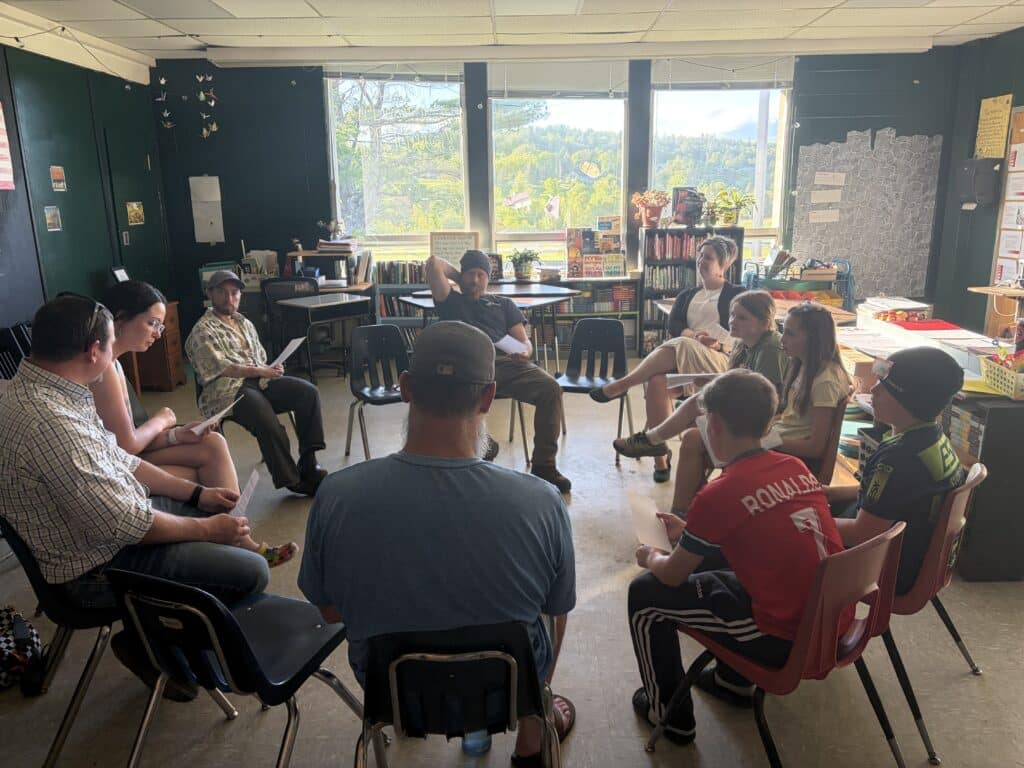
The event was amazing! It was all the more successful, because it was student-designed and student-led: Students planned outreach, designed flyers and decorations, prepared activities, and facilitated conversations with family members. Drawing on activities they had experienced during retreats throughout the year, they led team-building challenges, including group juggling and a tower-building design challenge, before inviting families into circle conversations about the transition to middle school. They asked their family members and their classmates questions like “What are you excited about next year?” and “Where do you see yourself having a positive impact in your school, family, and community?”
The student engagement in the planning and leading of the event was connected to the high turnout: 19 of the class’s 22 students attended, along with their parents/caregivers, siblings, school staff, and the principal. The students really rose to the occasion, creating a celebratory and welcoming space that reflected the ownership they had taken throughout the process.
Winooski School District Anti-Racism Steering Committee – “Block Party”
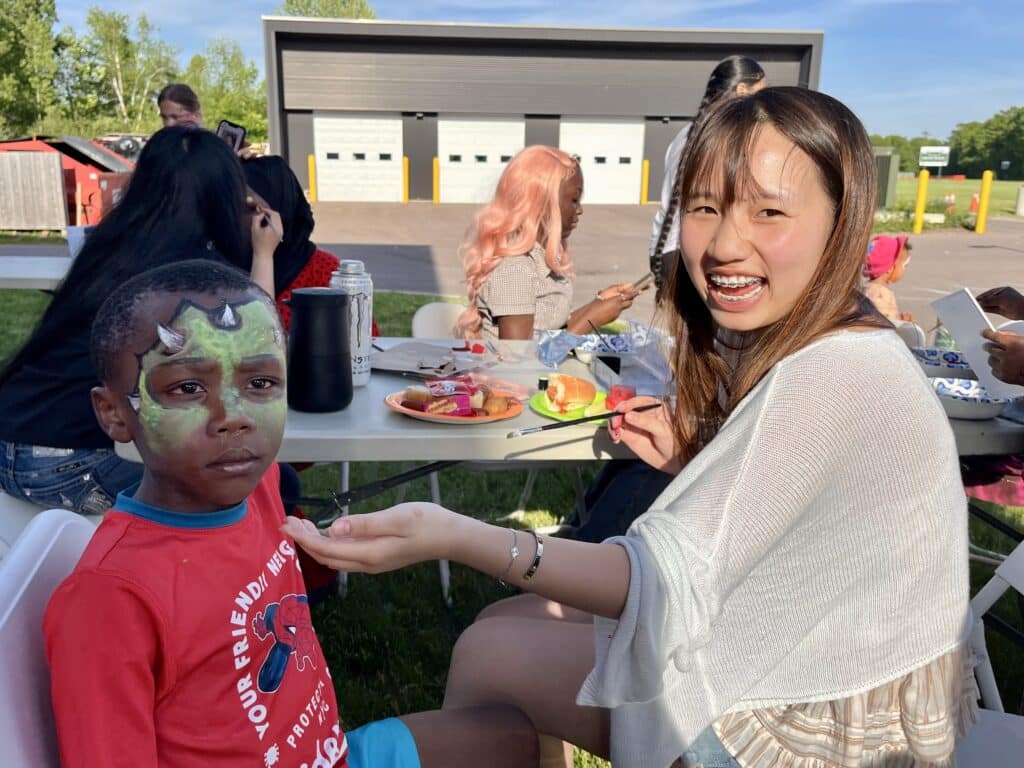
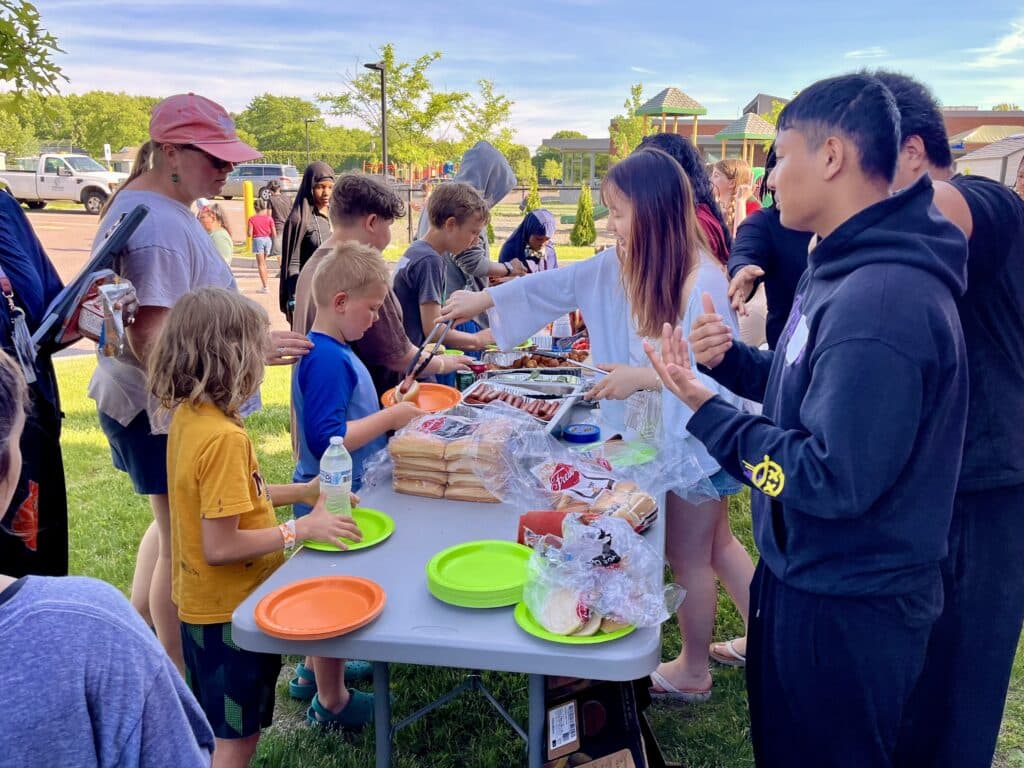
For the Winooski School District Anti-Racism Steering Committee (ARSC), community engagement took the form of a Block Party. Part of the team’s mission focused on creating spaces where BIPOC students, families, and community members can thrive and share their stories. The Block Party brought together approximately 100 students, families, staff members, and community members.
The atmosphere was energetic and welcoming, with music, food, art activities, face painting, slime-making, basketball, volleyball, and conversation. The team shared a presentation of their work and led a short community builder, but the heart of the gathering was simply bringing people together, having fun, and sharing food. Participants also contributed ideas about the future direction of the committee’s work through a chalk talk activity and collaborative art projects. The group already has ideas about how they can build on this work in future years.
Mount Abraham Unified School District Community Comes Together to Explore the Future of Education
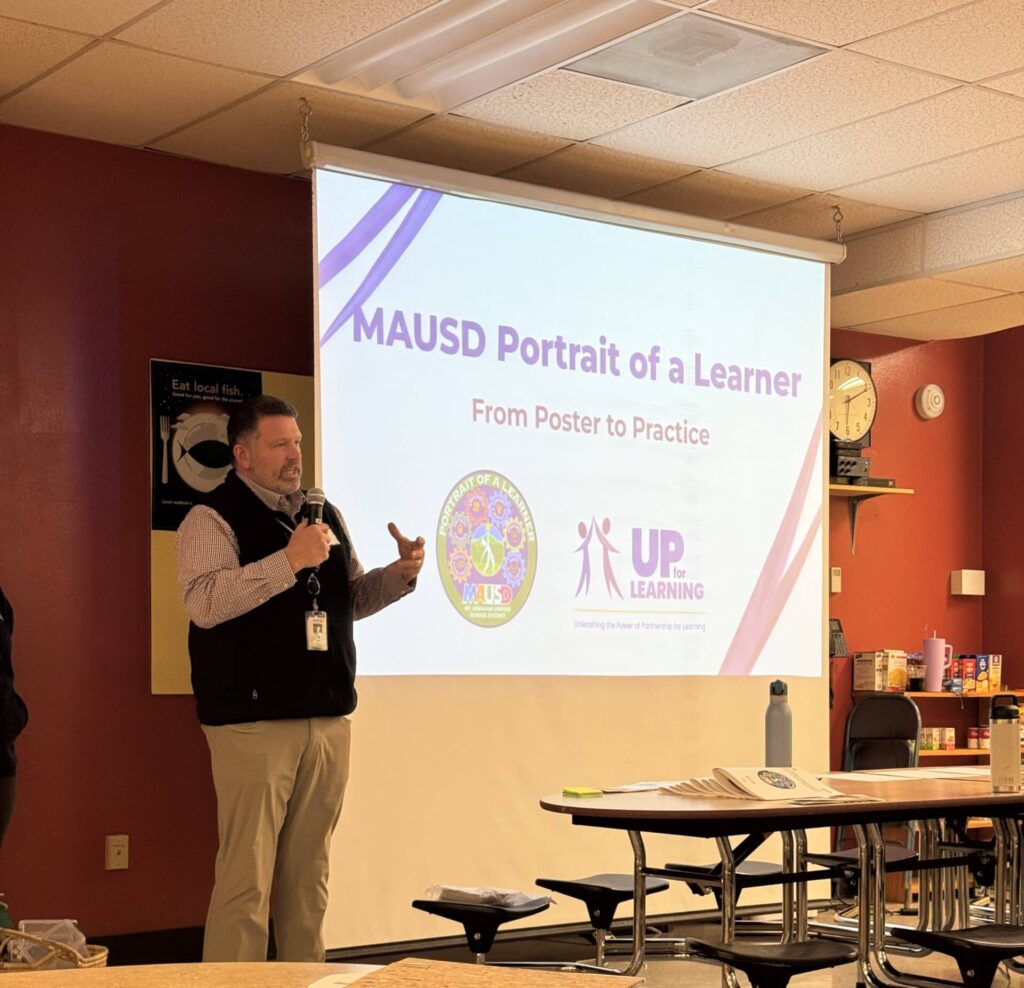
Approximately 100 community members, students, educators, school board members, and district leaders recently gathered for a MAUSD Community Engagement Evening focused on helping shape the future of the Mount Abraham Unified School District.
The event was designed to create meaningful opportunities for community dialogue while centering MAUSD’s Portrait of a Learner—a vision developed through extensive collaboration that identifies the skills, dispositions, and competencies young people need to thrive in an ever-changing world. The evening also showcased the district’s commitment to authentic youth-adult partnership, with students serving as co-creators, co-presenters, and co-facilitators throughout the event.
The evening began with celebrations of the work completed to date by school-based Portrait of a Learner teams. Through a gallery walk, participants visited displays from each school, learning about the progress, successes, and lessons emerging from implementation efforts across the district. Community members were invited to share “glows and grows,” reflecting on what stood out to them and what they learned about the community’s aspirations for young people.
Students then facilitated circles that encouraged participants to reflect on the values they hope schools help young people develop and carry into adulthood. Participants also considered how the Portrait of a Learner can support a future-forward education that prepares students for success in school, work, civic life, and their communities. Building on these reflections, community members engaged in thoughtful discussions about several possibilities currently being explored by the MAUSD School Board, including the potential closure of one of the elementary schools, the possibility of moving sixth grade students to Mt. Abraham Union Middle/High School, and opportunities for sharing services with neighboring districts through Cooperative Educational Service Agencies (CESAs).
Throughout the evening, participants considered how each possibility might help the district better fulfill the vision outlined in the Portrait of a Learner. Community members shared questions, hopes, concerns, and ideas, which were documented and will be brought back to district leaders, the Portrait of a Learner team, and the School Board to help inform future planning.
The event demonstrated the power of bringing together diverse perspectives in service of a common goal: ensuring that all MAUSD students have access to meaningful, engaging, and future-focused educational experiences. By centering youth voice, fostering authentic dialogue, and grounding conversations in shared aspirations for young people, MAUSD continues to model how communities can work together to navigate complex decisions while keeping students at the heart of the process.
These three events showcase the range of ways communities can come together around UP’s work, whether through celebration, reflection, or dialogue. Collectively, they remind us of Margaret Wheatley’s words: “There is no power greater than a community discovering what it cares about.”
